







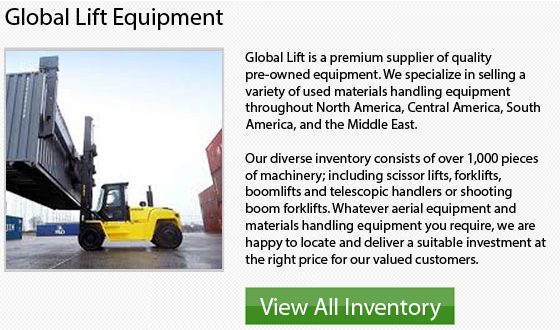
Lift truck Engines
Forklifts are classified as small-engine vehicles. The engines of the forklift all follow the principles of internal combustion, though the numerous makes and models of lift truck will have a different design and layout. Forklifts are made more toward producing high torque rather than for speed. They usually are geared to low speeds. The engine powers the forklift's drive wheels. The engine is also needed to lower and lift the forks via a series of chain pulleys. Nearly all forklift engines that are modern are powered by propane because they will be utilized indoors, where diesel and gasoline engines will be inappropriate because of the exhaust they produce.
A four-cylinder engine-block is typically found in a lift truck. Much similar to the engine in small cars, forklift engines have cylinders that contain pistons connecting to a camshaft. The head of every cylinder has an exhaust hatch, a spark plug and an exhaust hatch, each of them one-way and spring-loaded.
Engine Function
Propane passes through the opened throttle-plate in a fine spray, once the operator starts up the forklift engine. This fine spray mixes together with air which comes from the mass air intake before moving into the cylinder's head intake hatches. Each and every one of the four pistons is staggered to rise in an exact sequence, which compresses the air and propane mixture as every piston rises to the top of the head. With timing which is really precise, the engine's battery and alternator produce an electrical current that passes through the spark plug. The fuel ignites leading to an explosion that drives the piston back down to the bottom of the cylinder, leading to a continuous turning of the camshaft. In the cylinder, an air pressure imbalance causes the exhaust to be drawn out through the exhaust hatch when more fuel passes into the cylinder. Propane burns a lot cleaner compared to gasoline and diesel and the exhaust is not as harmful.